
ENGENE!
Last year, I'd been a cinematography student, learning the ropes of filmmaking by analyzing the moving picture (including the Romance: Untold Cinema). Since then, I have sat in the coveted chair as director, watching my scripts come to life frame-by-frame.
You can keep up to date on all of my projects on my Instagram.
After reading the articles put out yesterday regarding the premiere, I took the liberty of re-watching Late Night with the Devil, so expect some references!
I will be breaking the concept cinema down shot-by-shot, so you can get an idea of some of the creative intentions and deeper themes of Desire: Unleash.
ENHYPEN (엔하이픈) DESIRE Concept Cinema
If you know anything about film, or even about writing, you know that the first shot, the first sentence, should make the most impact. It sets the tone. It often serves as the foundation of your story moving forward.
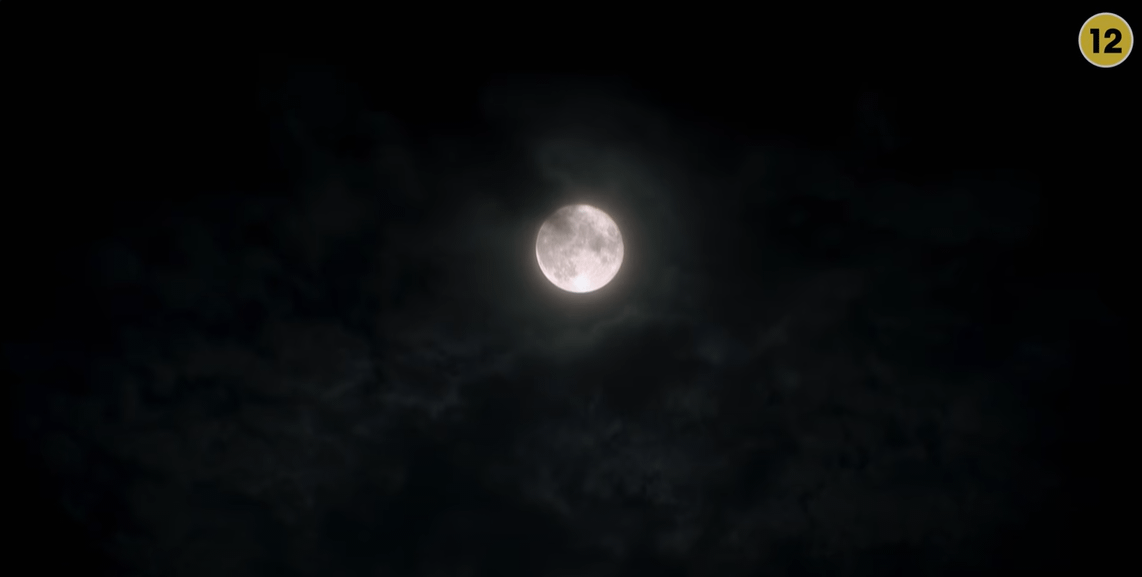
Park Minsu gave us a shot of the moon.
Why?
We get the answer 30 seconds in. Before I dissect that though, I want to give a brief explanation as to how directors put together a shot list.
A shot list, at its core, should be comprised of four elements: frame size, subject, angle, and movement. We could get into the specifics of lens sizes, equipment, and modes of sound—but at its core, these four elements tell the story, while the last three (lens, equipment, sound) fall under a more technical category that should be deliberated with your camera department, primarily your director of photography.
Anyway! This first shot can be classified as an EXTREME WIDE, often used in or as establishing shots. Wide frame sizes, like the establishing shot, set up the context of the scene, and often take precedence in your shooting schedule, being that the first shot in most film and television tends to be the establishing shot (and also for additional technical reasons, such as extensive setup, continuity, etc.).
We know our subject, but what about the movement?
We tilt down. Why? Look at the architecture. It looks like New York. A vista of gothic skyscrapers, contrasted by a neoclassical building in the center. Park Minsu wanted to establish that the setting of Desire: Unleash take places in America. Or at the very least, outside of Korea.
ENHYPEN (엔하이픈) DESIRE Concept Cinema
Back to the moon.
It turns red.
A bit on the nose with the symbolism—red for desire and lust, of course, but for danger and blood(-thirstiness) too. We get a cool closeup of SUNGHOON, with the moon in his eye, bathed in red light. On a thematic level, we can assume that SUNGHOON has been consumed by his desire*—*his lust and hunger for blood. In this moment, SUNGHOON embraces a feral vampiric drive.
From a plot standpoint, we can infer that something about this moon on this night spurs SUNGHOON, SUNOO, and JUNGWON into action. We call this the catalyst—and the catalyst drives the story forward, giving our characters a goal. JUNGWON confirms this, "It has started."
ENHYPEN (엔하이픈) DESIRE Concept Cinema
Do you remember what I said about wide shots? What did Park Minsu do? He started wide and pushed in. We call this a dolly in. Park may have used a Dana Dolly (in my short time as director, I have been partial to this movement and piece of equipment). We use a dolly in to immerse the audience into the scene, but it could also be used for deeper thematic purposes.
Replay 00:41. Again. Again. What do you notice about HEESEUNG?
Pain. He takes a sharp breath, clamps it down. (By far, my favorite scene. Such a small moment, but so much emotional depth. 10/10 delivery, HEESEUNG!).
A dolly in may represent that pain closing in on him—whether that pain comes from withdrawal, suppressed desire, or even conflict within the family.
ENHYPEN (엔하이픈) DESIRE Concept Cinema
In the next shot, we actually get shot-to-shot inspiration from Late Night with the Devil. Due to copyright reasons, I will refrain from posting the exact shot, but you can find it in the opening scene!
ENHYPEN (엔하이픈) DESIRE Concept Cinema
We pan back to HEE– Wait, no. NI-KI.
What do you notice about NI-KI compared to HEESEUNG?
He looks stoic. Unamused. Bitter or angry, even.
I think the switch represents not only this duality between human and vampire, but also a shift in feelings, a change in emotion as soon as HEESEUNG sees JAY. He may wish to be there with him. Maybe HEESEUNG, represented by NI-KI, feels an element of resentment or envy. Whatever it may be, NI-KI and JAKE seem to be the metaphorical yins to the yangs of HEESEUNG and JAY.
ENHYPEN (엔하이픈) DESIRE Concept Cinema
This over the shoulder shot—a cinematic masterpiece. Again, we have the theme of duality, of warring emotions and desires. JAKE will go down in history as the MVP in this concept cinema. He had such a subtly nuanced performance, from the line delivery with "Because I want to be seen," to the small choices in movement, especially in his eyes, during "To remind you that I exist. To remind myself."
ENHYPEN (엔하이픈) DESIRE Concept Cinema
You can tell JAY studied for his role. He oozes charisma. 'Nuff said.
ENHYPEN (엔하이픈) DESIRE Concept Cinema
HEESEUNG looks tortured. Something eats at him. We use closeups like this to let the audience in on a specific, significant emotion. I like to think, too, that NI-KI may be starting to win, may be starting to influence HEESEUNG. He starts to fantasize…
ENHYPEN (엔하이픈) DESIRE Concept Cinema
We get a peak inside his mind. We see what he wants, what he covets deep in his heart. But we also see fear, and fear sours the image of SOOHA/CHLOE. Both parts, light and dark, vampire and human, NI-KI and HEESEUNG, desire the same thing. Only one knows the cost.
Stay tuned for PART 2!
In the meantime, celebrate your moms (or mother figures) today! 🫶🫶


Leave a Comment